Winter Olympic (Mental) Games 2026
Four tools we can learn from these top athletes and four questions to ask ourselves to improve our mental games
2/26/20266 min read
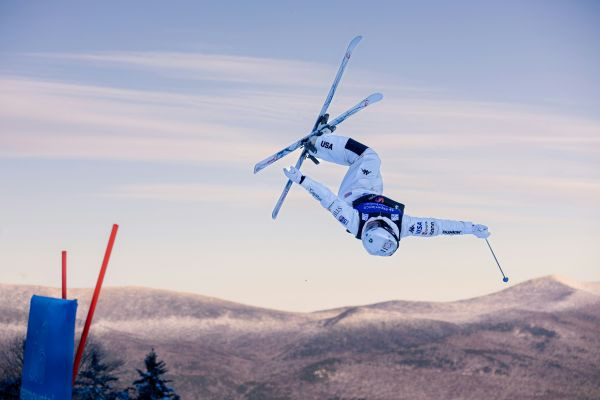
Have you been feasting on Winter Olympics videos the past few weeks? I know I have. I love sports, and having competed in judo in South East Asian Games, I am in awe of how Olympic athletes push human physical boundaries in different ways. In judo, world champion Isao Inokuma talked about fighting spirit (闘魂) and how judokas primed their minds to handle opponents – both external and internal. Hence, I find the psychological tribulations of sports at the highest level fascinating. Here are useful takeaways for us Muggles in business and life.
1) Mindset
How we look at something can completely change how we think, feel and perform. American figure skater Ilia Malinin, Quad God, is in a league of his own and the strong favourite to win gold. Unfortunately, the expectation and pressure were too much and he fell twice in his free skate (the skaters were scored in short program and then in free skate a few days later). This contrasted with Alysa Liu, another American figure skater, who was out there to do what she enjoys and just wants a stage to share her art. She came third after the short program. Before the free skate, she said to USA Today, "I just really want to be invited to the Olympic Gala...I have a really cool gala program that I'm working on, and it's basically done. I have a dress for it and everything.” What about a medal? "I don't need a medal,” she chuckled. “I just need to be here, and I just need to be present. And I need people to see what I do next."
Later, after she won gold and was asked about the Olympic pressure, she replied, "You would have to explain what Olympic pressure is. Who is giving - who is the pressure?" She described her feelings on the ice as "calm, happy and confident."
The most decorated Olympic freestyle skier, Eileen Gu, believes many competitors in the finals of an event can win it, but those who reach the podium are those who conquer their nerves. She tries to keep this in the back of her mind: nervous energy and excitement are the same biochemical in our brain. Our brain decides if it’s positive or negative, so when she is nervous, she tells herself, 'You're not nervous, you're just excited'.
After the disappointing free skate performance, Ilia told The Washington Post, “I came out a different person [with] a different perspective, different mindset,” and he intends to take what he learned as the “fuel for the future”.
As we can see, how we and our teams see things have a huge impact on our thoughts, emotions and performance. Often we are not even aware of what our frames of mind are, let alone how they may sabotage us, because they feel like the only reality to us. As a coach and facilitator, I work with leaders and managers to shine a torch on their hidden assumptions and beliefs, so they have the power to choose the most empowering mindsets possible. For example, a client was frustrated by the restrictions imposed by the Head Office. By adopting the perspective of the owner of the business, he broke through the victim mindset and influenced the company to take on better policies.
2) Concentration
Besides mindset, this Olympics also shows us the power of concentration. I’m very happy that skeleton pilot Matt Weston won the first British gold in this Olympics and am intrigued by some aspects of Team GB’s training. One would expect that it is a disadvantage for Britain not to have an ice track. But they turn it into a superpower.
"What the Brits are really good at is that when we turn up a track, you have six practice runs before the race, so six minutes of practice," former British skeleton Olympic gold medallist, Lizzy Yarnold, told BBC Sport.
"You go in there with purpose, with clarity, with commitment in every single run, and everyone is tuned into that particular performance advantage that you're focusing on.
"Sometimes when other people might see a negative, you can switch it up and make it your superpower."
Weston won by 0.88 seconds. In skeleton, that is a big margin, so one can imagine how focused these athletes need to be throughout their runs.
These are powerful reframing and concentration in action.
On the topic of concentration, Eileen also mentioned to Jing Daily how she juggled being a free ski world champion, the highest paid athlete at the Winter Olympics, an IMG model and a Stanford undergrad. To her, time management is not about the volume we put into something, but about the optimisation and the efficiency we put in. She likes to study in 90-minute intervals, taking breaks in between to do something else. When she is doing something, she focuses on it 100%.
Either that or she has a hidden twin – or triplet sister. She exemplifies the power of focus – something that we can practise and improve on in our work and life.
3) Visualisation
The third aspect that we can learn from Olympic athletes is visualisation. Athletes from different sports disciplines use visualisation to focus their minds and boost their performance. Our brains can’t easily tell the differences between a vividly imagined experience and a real one. Hence, visualising what we are about to do builds familiarity and strengthens the neural pathways for successful performance. For example, many athletes in bobsleigh, luge and skeleton practise by visualisation on dry land, moving and contorting their bodies as they imagine themselves doing the runs.
How can we apply this to our work or life? When we need to perform in certain events, such as giving a presentation or sitting on a panel, we can imagine the state of mind we want to be in, eg confident and relaxed, and visualise ourselves doing the task successfully, in the state we want to be in eg presenting confidently or having a critical conversation calmly. We can practise getting into that state of mind and get better at doing that, summoning that state of mind when we need it, something I help my clients to do.
4) Taking care of ourselves
No cross country skier comes close to Norwegian Johannes Høsflot Klæbo’s record of 116 World Cup Wins and 11 Olympic gold medals. He is the first man to win all 6 cross country events in one Game, from sprint to 50km. A video of him sprinting up a steep hill on skis has gone viral. He is extremely disciplined, trains very hard and has a clean lifestyle.
But last year, he knew focusing so much on the training and competitions to the exclusion of everything else was not sustainable. “I knew after the World Championships that this way of life was not going to work for very much longer,” he told The New York Times. “After they finished, I was just completely exhausted. I felt like I was done with the sport for a bit.
“But then I had an amazing spring where I didn’t think about skiing, and the motivation came back a bit. I think this year has been way better in terms of what we’ve done both outside of training and during it. I think I can keep living this way for quite some time. I wouldn’t have been able to say that last year.”
One of the key changes he made is to train with fellow Norwegian skier Emil Iversen, who provides companionship and they make sure they have fun and relaxation amidst their training, hitting golf and making spoof videos. Like Liu, he found a way to look after himself as a person and made his life and training more enjoyable.
Klæbo’s father, Haakon, explained, “After Trondheim, he turned to me and said: ‘I’m done.’ But now, you see how he’s been skiing. I think he’s better this year than he was last year. That’s the product of happiness. I hink he feels much more free this season.”
This is an important reminder that we are all human and performance is only sustainable when we look after ourselves and one another as humans.
So here are some questions that we can ask ourselves:
1) What is driving me? Does that give me joy and is it sustainable?
2) Where and how I can sharpen my power of focus?
3) Where can I use visualisation?
4) Am I taking good care of myself? How can I make my and others’ work more enjoyable?
Let me know what you think below or email me. We can set goals to practise what we learn from these athletes before the next Olympics!
hello@michellecheng.co.uk